Requests arrive without complete context
Phone, email, portal and emergency requests enter the operation differently.

One connected field service platform
Connect service requests, scheduling, dispatch, technicians, equipment, parts, customer communication and proof of work through one configurable platform.

The cost of disconnected service technology
Field service businesses often use separate tools for intake, scheduling, dispatch, technician work, inventory, communication and billing. Each system sees one part of the job, while your employees keep the complete service experience together.

Phone, email, portal and emergency requests enter the operation differently.
Skills, territories, availability, parts and priority are difficult to see together.
Notes, photos, forms and customer approvals are separated from the live work order.
Calls, messages, spreadsheets and duplicate entry keep service work moving.
Your team should complete the work. They should not have to reconstruct its history.
Field service businesses
Technicians, equipment and work at the customer’s site.
Work organized across territories or recurring visits.
One service record. Every participant.
Customers, coordinators, dispatchers, technicians and managers can work from the same current customer, asset and work-order context.
Request service, provide details, follow status and review completed work.
Qualify requests with customer, asset, agreement and history visible.
Coordinate priority, territory, skills, availability and travel.
Access the work order, history, tasks, parts and required evidence.
Connect required parts, truck stock, reservations and usage to the job.
See workload, exceptions, completion quality and service outcomes.
TECHNICIAN APPThe complete job in the technician’s hand
Give technicians the customer history, asset details, service agreement, required steps, parts, safety information and evidence requirements they need to complete the work correctly.
Online or offline, the work order remains the operational record. Updates return to the same customer, asset, schedule and service outcome.
One change. Every service workflow.
Configure tasks, skills, parts, safety requirements, evidence and completion rules around the service being performed.
From service request to completed outcome
Customer, asset, symptoms and priority begin the record.
Agreement, skills, time, territory and parts are confirmed.
The field team receives the current scope and context.
Tasks, parts, readings, notes and customer updates stay current.
Approval, proof, follow-up and billing context remain connected.
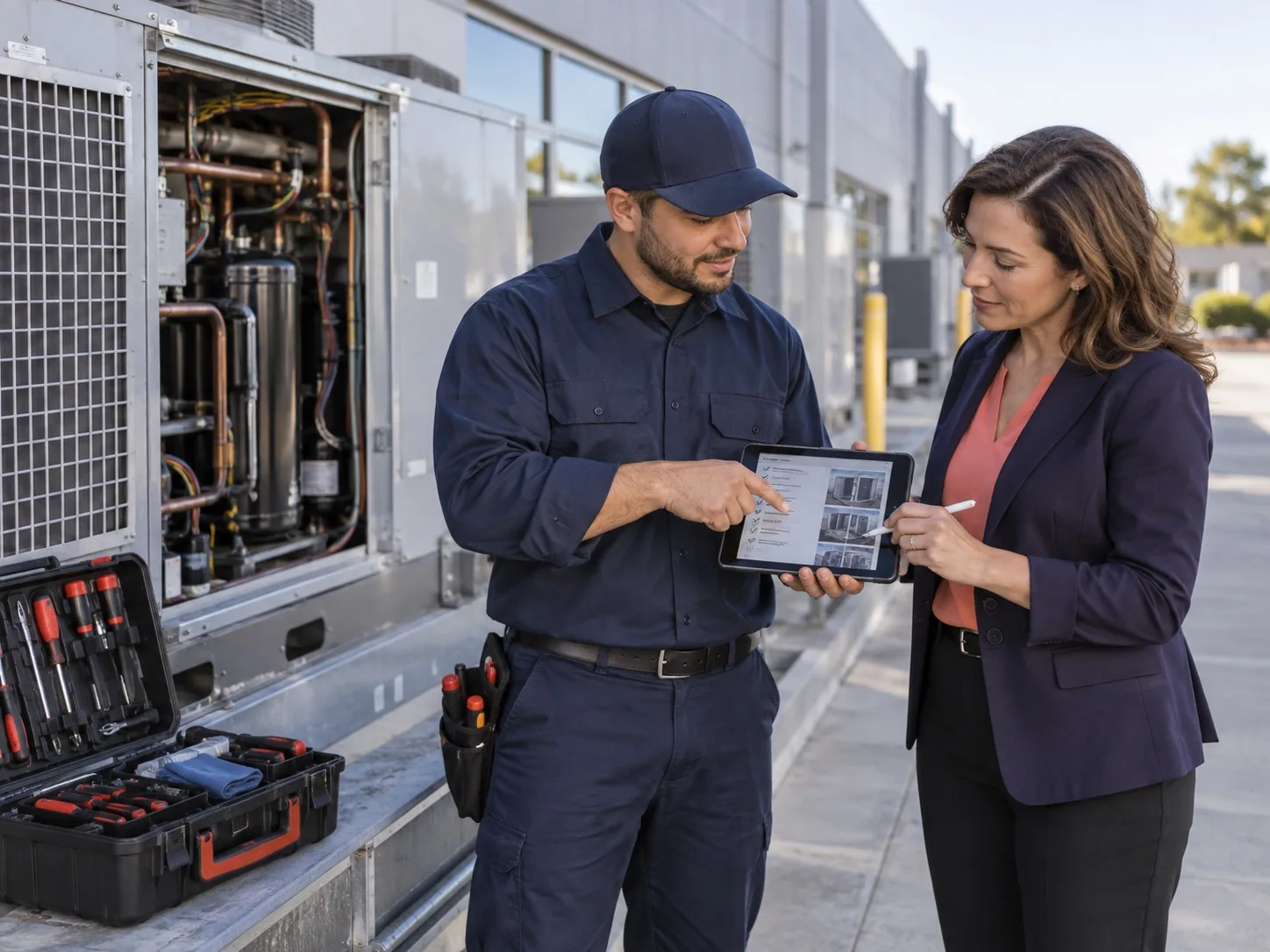
Completion is more than a status
Connect required steps, readings, parts used, photos, notes, signatures, exceptions and follow-up to the original work order.
The platform adapts to the operation
We map the customers, assets, terminology, roles, territories, rules, required steps, approvals, exceptions and outcomes that define your operation. OPPSTech is then configured around those workflows.
You are not buying a fixed field service template. You are creating a connected operating environment for your business.
One team with the complete context
When the customer, asset, schedule, technician work, parts and evidence share one operational foundation, support can begin with the complete context instead of one isolated tool.
Automation after understanding
Agents are designed and deployed only after OPPSTech has been configured around your customers, assets, technicians, territories, rules, controls and service outcomes.
Organizes request details and identifies missing customer, site or asset context.
Supports technician selection using skills, territory, schedule, priority and rules.
Monitors reservations, truck inventory, replenishment and service risk.
Connects service activity with technician performance, asset history and outcomes.
Prepares accurate updates from the complete request, schedule and work history.
Questions service operators ask
Yes. Equipment, locations, prior work, agreements, documents and outcomes can remain connected to the customer and each new work order.
Yes. Assignment workflows can use technician qualifications, availability, territory, priority, travel and other configured operating rules.
Yes. Required steps, parts, readings, notes, photos, signatures and exceptions can be captured through the technician workflow.
Yes. Communication can reflect current scheduling, technician status, work progress and completion outcomes.
Not necessarily. Specialized services may remain. OPPSTech provides the connected operational foundation that coordinates the customer experience and the work.
Start with the way your business operates
Walk us through your customers, assets, scheduling, dispatch, technicians, parts, required steps and completion process. We will show you how OPPSTech can connect them.